Emergency Response Program

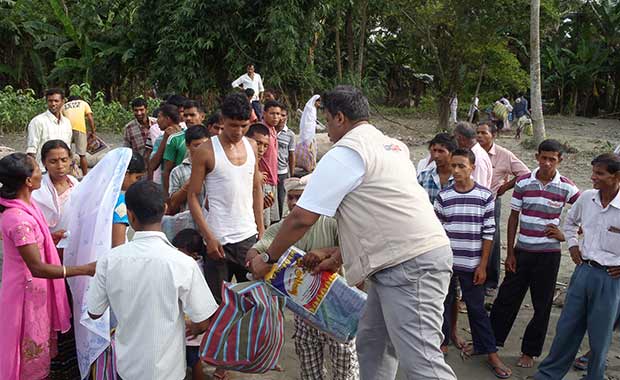
Our partner in India distribute AmeriCares aid
Staff photo
Our partner in India distributes AmeriCares aid.

When natural disasters and man-made crises strike, local transportation systems collapse and supply chains are disrupted, AmeriCares India is there to help. Our experienced staff members are experts in navigating the challenging logistics of delivering aid to the epicenter of a calamity. Our promise is simple: when people are in crisis, they will get the help they need—whenever they need it, and wherever they are.

To assist countries and communities that have difficulty responding to the tragic losses and extraordinary costs of natural disasters and conflict-induced crises, AmeriCares launches emergency response initiatives for four emergency phases:


Emergency Response Program

When natural disasters and man-made crises strike, local transportation systems collapse and supply chains are disrupted, AmeriCares India is there to help. Our experienced staff members are experts in navigating the challenging logistics of delivering aid to the epicenter of a calamity. Our promise is simple: when people are in crisis, they will get the help they need — whenever they need it, and wherever they are.

Many regions of India are prone to natural disasters and AmeriCares has provided immediate medical relief for many of them over the years including:

  • Earthquakes (Maharashtra in 1993, Gujarat in 2001 and Kashmir in 2005)
  • Cyclones (Orissa in 1999)
  • The Asian Tsunami (Tamil Nadu in 2004)
  • Floods (Gujarat and Mumbai in 2005, Bihar in 2007 and most recently in 2008)

Emergency Preparedness 

AmeriCares not only responds to disasters but contributes to capacity building for preparedness. We are supporting New York Presbyterian Hospital/Columbia University Medical Center and Columbia University's Mailman School of Public Health in conducting training on emergency medicine, trauma care and disaster preparedness and response for doctors and hospital administrations in the earthquake-prone Gujarat state. AmeriCares, New York Presbyterian Hospital and Columbia University launched this training program in June 2005.

This three-year initiative consists of emergency medicine and disaster preparedness courses and trainings that build on the National Trauma Management Course run by the Academy of Traumatology of India. When completed, it will have trained over 500 health care professionals. The Gujarat Ministry of Health was also a key partner in this initiative.


Emergency Relief 

Bihar, India’s poorest state, suffers high rates of contagious diseases. Cramped conditions and flood-polluted water caused by regular flooding have made existing health problems much worse. Geographically susceptible to flooding, the state of Bihar, which includes the intersection of Northern India’s three most powerful rivers—the Ganga, Brahmaputra and Meghana—and is often hard hit by monsoons.

When Kosi River flooded in the summer of 2008, three million people were displaced by further flooding. In response, AmeriCares continues to work with our local health care and pharmaceutical partners in India to deliver medicines, medical supplies, nutritional supplements and hygiene items to help the people in the flood-affected communities. Supplements address the food shortage and restore important nutrients such as Iron and B12—without which young children can develop severe developmental disabilities.


Emergency Recovery and Rehabilitation 

The Indian Ocean tsunami of 2004 damaged Tamil Nadu’s health care system and exhausted emergency resources. Many villagers must now walk at least two to four miles to reach a health clinic. Women and children often have even greater limits on access to care. The region’s high rate of HIV infection also needs greater attention.

AmeriCares grant to our local partner Project Concern International (PCI) helps respond to these needs in four key ways. The grant:

  • Improves access to health care to over 24,000 people through mobile medical health teams that provide primary care, vaccines, and testing, as well as counseling and referrals.
  • Provides support to design and implement disaster preparedness plans. It also provides training in disaster planning and management, distributing educational materials, setting evacuation routes and forming disaster management committees.
  • Creates a micro-health insurance plan that aims to enroll 500 women, providing further access to quality health care they and their families could not otherwise afford. Enables general health care, prevention, education and support group services to more than 200 people living with HIV.


Powered by Convio